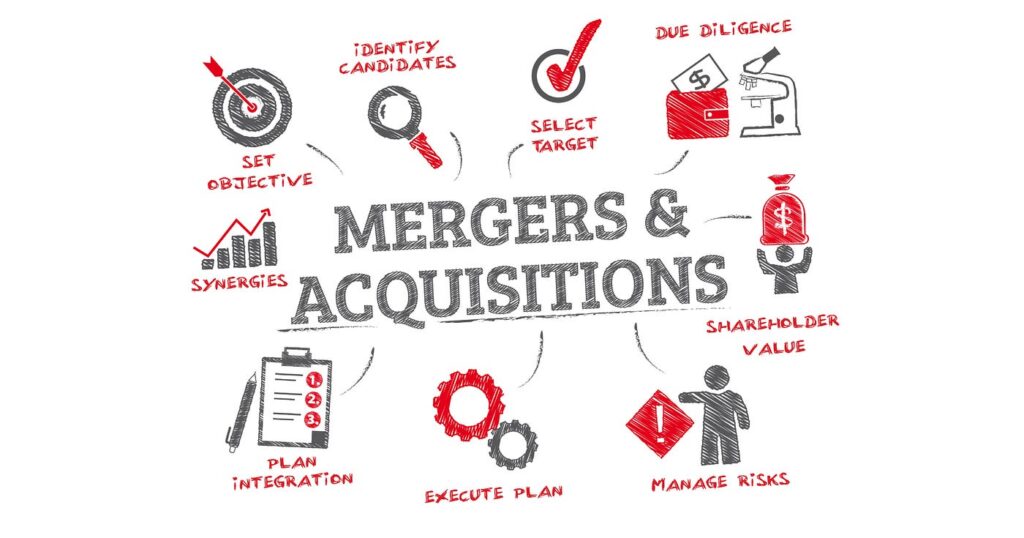
Mergers and acquisitions often sound impressive and sophisticated.
But when it comes to the moment of signing and paying, buyers usually care about just two things:
What am I actually buying?
And am I also inheriting a pile of hidden historical liabilities?
Whether you are acquiring a small company, taking over a shop, or purchasing an ongoing business, viewing the deal strictly from the buyer’s perspective and asking the right questions can dramatically reduce risk.
The following seven questions cover almost the entire lifecycle of a small-scale acquisition — from choosing the transaction structure, to identifying potential liabilities, managing post-completion risk, and ensuring a clean handover of control.
Q1: Should I buy “shares” or “assets”?
A: This is the first and most important fork in the road.
Generally speaking, asset acquisitions are safer, because you usually do not inherit historical liabilities.
Share acquisitions are operationally simpler, but riskier, as you may take on past obligations along with the company.
In simple terms:
If you want stability and risk control, asset deals are usually preferable.
If you want convenience, share deals are smoother — but the risk must be managed through contract protections.
Q2: What legal risks might I be taking on?
A: The main risks include historic liabilities (tax, employment, contractual issues) and business continuity risks, such as over-reliance on key individuals or major clients.
This is why legal due diligence is not just about “reviewing documents”.
Its real purpose is to answer a deeper question:
What actually supports the value of this business?
Q3: What are warranties, and why do I need them?
A: Warranties are contractual promises made by the seller about the condition of the company or business.
If those statements turn out to be untrue, the buyer may be entitled to claim damages or compensation.
Put simply:
Warranties exist so that if what the seller says does not match reality, you have a legal basis to recover losses.
They are not decorative clauses — they are one of the buyer’s core enforcement tools after completion.
Q4: What if problems only arise after completion?
A: In reality, many issues do not surface before signing. They emerge after the deal has completed.
At that point, whether you can recover money or hold the seller accountable depends largely on whether you have built in proper remedial mechanisms, such as:
Warranties – claims for misrepresentation or inaccurate statements
Indemnities – stronger, targeted protection for known risks
Retention / Escrow – withholding part of the purchase price to cover post-completion issues
In many small transactions, the most effective protection is not beautifully drafted clauses, but physically retaining part of the purchase price through retention or escrow arrangements.
Q5: Can I “ring-fence” historical liabilities?
A: To some extent, yes — but almost never completely.
Common approaches include:
Using transaction structure to avoid inheriting liabilities (e.g. asset deals)
Allocating specific risks to the seller via indemnities
Securing protection through retention or escrow
Considering insurance in appropriate cases (not suitable for every small deal)
The core logic is simple:
Identify the risk clearly, assign responsibility clearly, and make sure the money is secured.
Q6: Will leases and contracts automatically transfer to me?
A: Many buyers assume that “everything comes with the business”. In practice, that is often not the case.
Whether leases, supplier contracts, customer agreements, or platform accounts can be transferred depends on:
Whether the contract prohibits assignment or requires consent
Whether landlords or counterparties agree to the change
Whether new contracts or replacement arrangements are required
If this step is mishandled, you may face the most awkward outcome of all:
You’ve bought the business — but not the contracts it needs to operate.
Q7: What actually happens on completion day?
A: Completion day is not a formality. It is the moment the transaction truly happens.
Typically, it involves:
Funds transfer (purchase price payment, retention/escrow funding)
Document execution (completion documents, board/shareholder resolutions, asset transfer deeds)
Transfer of ownership and control (signing authority, bank access, operational control)
Handover checklist (keys, passwords, original contracts, company seals, customer data)
In one sentence:
Money transferred, documents signed, control handed over — only then have you truly taken over the business.
Turning “Buying a Company” into “Buying a Manageable Future”
Small-scale M&A is not risky because the deal size is small.
It is risky when buyers think too big and ask too few questions.
The value of these seven questions is that they force clarity from the very beginning:
What are you buying?
What liabilities are you assuming?
How are risks backed up?
What can and cannot be transferred?
How exactly does control change hands?
Once these questions are properly addressed, the transaction stops being a gamble —
and becomes a calculable, manageable, and executable commercial decision.