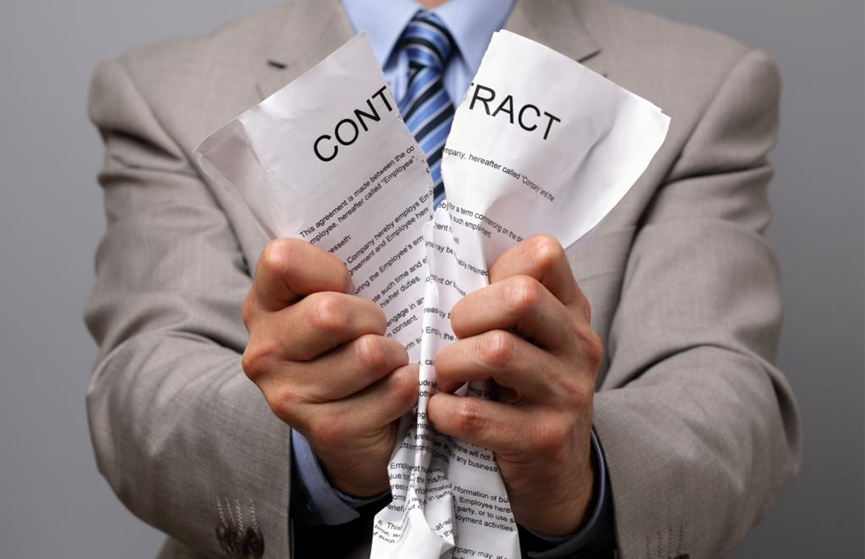
In UK commercial disputes, businesses most commonly react in one of two ways:
“They’ve breached the contract — we must sue immediately.”
“Litigation is too expensive — let’s just negotiate.”
In practice, however, litigation and negotiation are not emotional choices, but strategic ones.
Choosing the wrong path often means losing not because of the law itself, but because of poor timing and misjudgment.
This article looks at the real operational logic of UK commercial disputes, helping businesses assess when litigation is appropriate and when negotiation is the wiser option.
I. The Core Distinction: Litigation vs Negotiation

In UK commercial disputes, the fundamental difference between the two approaches is this:
- Litigation
Uses the authority of the court to resolve the dispute, in exchange for certainty and enforceability. - Negotiation
Operates within the legal framework, trading legal risk for efficiency and cost control.
The real question is not “Should we sue?”
but rather:
Which step best maximises the company’s interests at this stage?
II. Situations Where Litigation Is Usually More Appropriate
1. Clear Contract Terms and Clear Breach
For example:
- The contract has been validly executed
- Obligations, payment dates, and amounts are clearly defined
- The other party has no legitimate right to terminate
In such cases:
- Legal uncertainty is low
- Prospects of success can be reasonably assessed
- Litigation is often an effective option
2. The Other Party Refuses to Engage or Explicitly Refuses Performance
If the counterparty:
- Ignores solicitor’s letters
- Explicitly states they “will not pay” or “will not continue performance”
- Engages in persistent delay or passive resistance
This usually indicates that:
👉 The scope for negotiation is extremely limited,
and waiting further will only increase losses.
3. Court Enforcement Is Required
For example:
- Compulsory payment is required
- Asset freezing is necessary
- An injunction is needed to prevent ongoing harm
Only court proceedings can provide:
- Enforceable judgments
- Interim remedies
- Binding orders with coercive effect
4. The Claim Value Justifies Litigation Costs
Litigation in England and Wales is expensive.
Where:
- The claim value clearly exceeds anticipated legal costs
- The counterparty has identifiable, enforceable assets
Litigation may be commercially justified, not just legally viable.
III. Situations Where Negotiation Is Usually Preferable

1. Complex or Uncertain Facts
For example:
- Ambiguous contractual wording
- Reliance on oral agreements or informal email exchanges
- Disputed performance history
In such cases:
- Litigation risk is high
- Costs are unpredictable
- Negotiation offers greater flexibility
2. The Commercial Relationship Still Has Value
Where:
- Future cooperation remains possible
- The industry is tightly connected
- Long-term supply or distribution is involved
Negotiation helps to:
- Control conflict intensity
- Avoid irreversible breakdowns
3. Doubts About the Counterparty’s Financial Position
Even if you win the case, if the counterparty:
- Is close to insolvency
- Has assets dispersed or held overseas
- Presents high enforcement costs
Then a “legal victory” may not result in actual recovery.
Early negotiation is often the more realistic option.
4. Smaller Claim Values or Excessive Time Costs
For SMEs in particular:
- Management time
- Cash flow stability
may matter more than “winning on principle”.
Negotiation may better serve overall business interests.
IV. The UK Courts’ Practical View: Litigation Is Not Encouraged Where Settlement Is Possible
UK courts (including the High Court and County Courts) place strong emphasis on:
- Whether parties attempted settlement
- Compliance with the Pre-Action Protocol
If a party:
- Commences proceedings without reasonable settlement attempts
- Refuses mediation or alternative dispute resolution
Even a successful claimant may face:
Adverse cost consequences, despite winning the case.
V. The Most Reliable Practical Approach: A Phased Strategy, Not a Binary Choice

In many successful cases, the typical path is:
1️⃣ Issue a Letter Before Action
- Clarify legal position
- Preserve evidence of breach
- Open a negotiation window
2️⃣ Conduct Parallel Litigation Assessment
- Prospects of success
- Estimated costs
- Enforceability and recovery
3️⃣ Proceed to Litigation If Negotiation Fails
- Litigation pressure increases
- Procedural position is stronger
This is not compromise —
it is prepared, strategic escalation.
VI. Common Misjudgments
- “Negotiation shows weakness”
- “The earlier we sue, the better our position”
- “If a lawyer suggests negotiation, they just don’t want to litigate”
In UK commercial disputes, such assumptions often lead to strategic errors.
Conclusion: Litigation and Negotiation Are Both Tools
In UK commercial disputes:
- Litigation and negotiation are not matters of principle
- They are tools to be deployed strategically
The key issue is not:
“Can I win?”
but rather:
Which route allows me to achieve the most certain and enforceable outcome, at the lowest overall cost?
Before making a decision,
a professional assessment of the contract, evidence, and risk
is often far more valuable than taking immediate action.