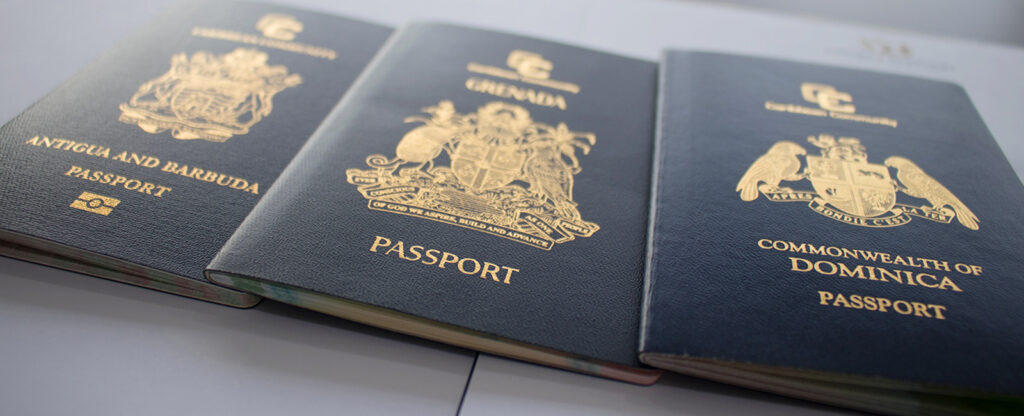
The five Caribbean countries offering citizenship-by-investment programmes (St Kitts and Nevis, Antigua and Barbuda, Grenada, Dominica, and St Lucia) have recently announced coordinated upgrades to their schemes. One of the most notable upcoming changes is the formal introduction of a light residency requirement.
Although this is a new policy design, the burden on most applicants is minimal and, in fact, enhances the stability and long-term value of the citizenship. However, for applicants who find it inconvenient to travel to activate and use their passports, it is advisable to start the application as early as possible. Applications submitted before the first quarter of 2026 are expected to still enjoy the benefit of zero residency requirements under the current rules.
1. What exactly is the new residency requirement? Understanding the core of the policy
The five Caribbean countries propose that:
New citizens must complete a total of at least 30 days of residence within five years after being granted citizenship.
This obligation has three key features that significantly reduce the burden on applicants:
1) The days can be split and accumulated flexibly
There is no need to stay continuously; the 30 days may be freely scheduled within five years. This makes it ideal for frequent travellers, entrepreneurs, expatriates, and internationally mobile families.
2) Family members may combine their days
When the family travels together, the stay counts once for the entire family. In other words, each person does not need to individually complete 30 days.
3) It is not a long-term stay requirement — it is a light obligation
Needing only 30 days within five years is essentially a way to establish a minimal, formal connection with the country.
This is very different from other countries that require hundreds of days of residence per year.
Although some people feel concerned when they hear “residency requirement,” the Caribbean is one of the world’s most famous holiday destinations. Its beaches, resorts, and recreational facilities are world-class—comparable to the Maldives—making it highly popular among travellers from Europe and North America.
For applicants from China and other regions, completing 30 days within five years can easily be achieved through:
- One or two family island holidays
- Winter vacation trips
- Short breaks for leisure, while simultaneously fulfilling the policy
This adds no real burden to daily life and allows applicants to enjoy top-level island vacations—
a truly “two birds with one stone” arrangement.
2. In addition to the residency requirement, the new policy introduces two further key changes
The five countries are not only harmonising residency obligations but also introducing enhanced regulatory measures to improve the credibility and security of their citizenship programmes.
1) Initial passport validity will be unified at five years
After completing the residency requirement and required compliance checks, applicants may renew their passports for a 10-year validity period.
This means:
The citizenship is not merely granted once and left unchanged, but maintained through a sustainable mechanism, ensuring greater long-term stability.
2) Passport and citizenship documents must be collected in person
In the future, passports and citizenship certificates must be collected personally, either in the Caribbean country or at one of its overseas consular offices.
This strengthens document security and reduces risks of misuse or unauthorised collection.
3. Who still benefits greatly from Caribbean citizenship under the new rules?
Although a residency requirement has been added, the core advantages of Caribbean citizenship remain unchanged. For the following groups, it continues to offer exceptional value:
① Individuals seeking convenient global mobility
Caribbean citizens continue to enjoy:
- Visa-free access to the UK and Schengen Area
- Visa-free entry to Hong Kong and Singapore
- eTA eligibility for Canada
- Wide access to visa-on-arrival countries
For business travellers and globally mobile individuals, the convenience remains outstanding.
Additionally, the required 30 days over five years can be combined with leisure trips or business visits—highly practical and cost-effective.
② Families needing global asset planning and wealth structuring Caribbean jurisdictions still offer:
- No worldwide taxation
- No capital gains tax
- No inheritance tax
- No long-term residency obligations after investment
For high-net-worth families engaged in international tax and asset planning, the citizenship remains a highly advantageous tool.
The light residency requirement even increases the substance of the status, improving global recognition.
③ Parents wanting to secure global education options for their children
Caribbean citizenship offers:
- Commonwealth advantages
- Broader educational pathways
- Additional benefits for certain university applications
- More choices for study, internships, and work mobility
The 30-day stay requirement over five years poses little burden for children and instead provides exposure to diverse cultural environments.
④ Individuals seeking a strategic “backup identity”
In today’s geopolitical climate, reliance on a single nationality is increasingly viewed as risky. Caribbean citizenship still provides:
- Stable political systems
- Commonwealth-based legal frameworks
- Allowance for long-term dual/multiple citizenship
- Enhanced global asset flexibility and security
The newly added residency requirement is so light that it does not diminish the passport’s value as a risk-hedging tool.
⑤ Applicants planning to pursue a U.S. E2 visa through Grenada
Grenada remains one of the few countries globally that offers a pathway to the U.S. E2 Treaty Investor Visa.
For individuals wishing to enter the U.S. through a lighter, more flexible investment route, Grenada continues to be one of the most cost-effective solutions.
Compared with the ongoing requirements of the E2 visa, a total of 30 days in five years imposes virtually no additional burden.
4. Why does the new residency requirement actually increase the value of the passport?
Because the upgraded Caribbean citizenship programmes will no longer be perceived as “citizenship available solely through investment,” but as:
- More internationally recognised
- Lower risk
- More sustainable long-term
- More suitable for real family use and planning
- More reliable for asset allocation
Once applicants complete the basic residency requirement, they benefit from a stronger, more credible, and more secure citizenship framework.
For applicants who genuinely need an alternative citizenship, this is a positive development rather than a burden.
Conclusion: Policy changes do not reduce value—they make Caribbean citizenship more mature, stable, and reliable
The upgrades to Caribbean citizenship programmes mark a shift toward greater standardisation, transparency, and international alignment across the region.
For applicants:
- The residency requirement is light and manageable
- All major advantages remain intact
- International credibility is further enhanced
- Long-term security of the status is improved
For individuals seeking a second citizenship, family planning solutions, tax optimisation strategies, or global mobility, Caribbean citizenship remains one of the most competitive options on the market today.